
Houston Women Cast Their Ballots:
Celebrating 100 Years of the Right to Vote
Thursday, July 2 –Wednesday, March 31, 2021
(please check back for further notice)
The Heritage Society Museum Gallery
Admission: $5 for adults, $2 children 6–18

IIn this year of 2020 we, as a nation, are celebrating a landmark in American women’s history: the 100th anniversary of the passage of the 19th Amendment to the Constitution giving women the right to vote. The suffragists encountered many roadblocks on their journey to become voters, yet they displayed unending perseverance in the 72-year struggle. The Heritage Society will open an exhibit, Houston Women Cast Their Ballots: Celebrating 100 Years of the Right to Vote, in the Museum Gallery at Sam Houston Park. This exhibit reveals the efforts of thousands of women in the state of Texas, especially those in Houston, through documents, photographs, historical objects, textiles, and various media.
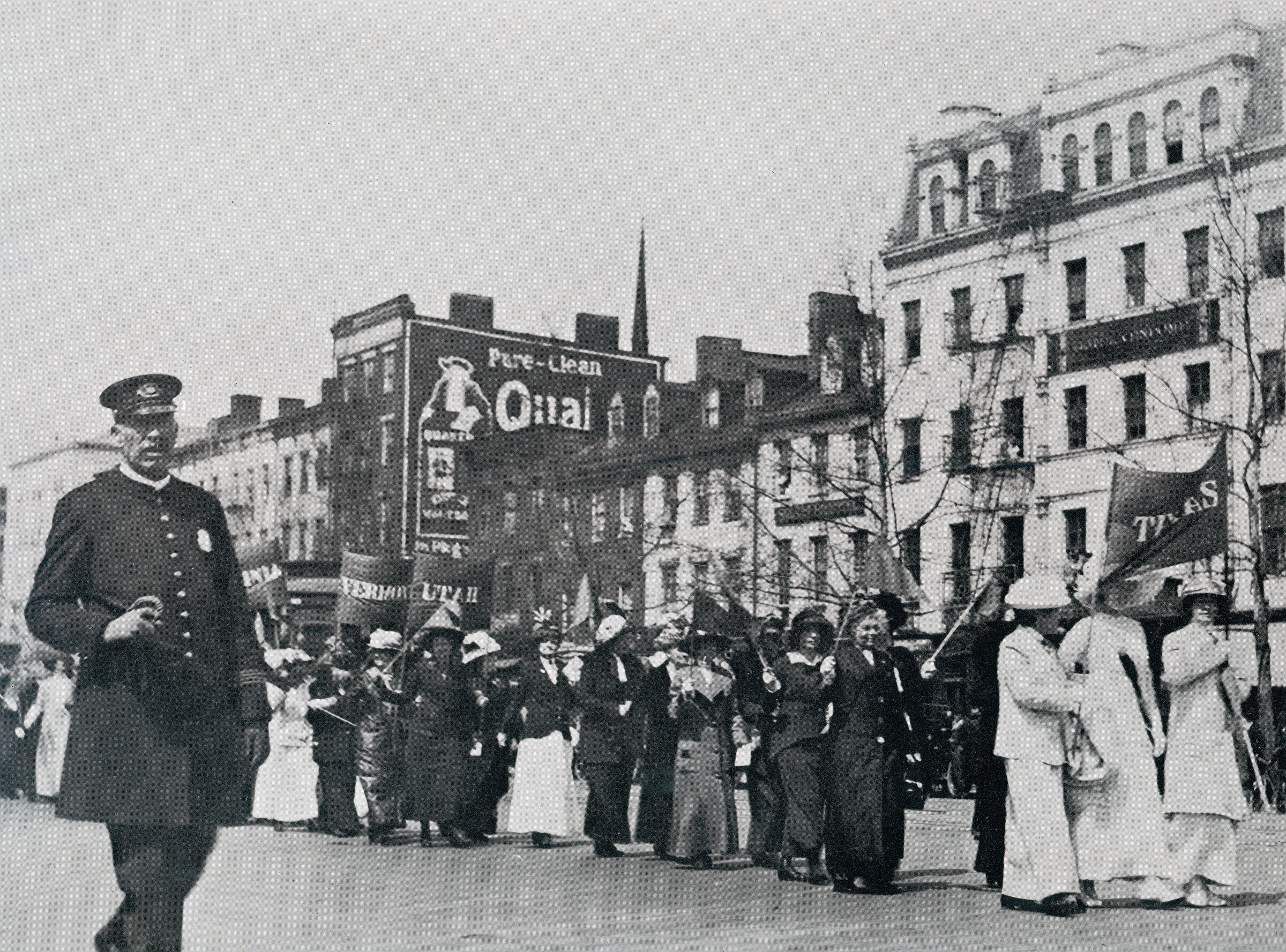
Texas Suiffragist at Washington, D.C. 1913 Parade
There will be video and Zoom lectures throughout the year that will continue the story of Houston women and their lives.
This exhibit is presented in partnership with the League of Women Voters and will celebrate the perseverance of women across America and here in Houston who fought for the right to vote.
Upcoming Lecture Series
Thursday, August 20, 2020
12:00–1:00 p.m.
A Look at Woman Suffrage: A Century of Struggle
by Betty Chapman
Thursday, September 17, 2020
12:00–1:00 p.m.
Blasting the Door Open:
Houston Suffragist Hortense Ward’s Legal Gambit to Break Texas’ Poll Tax Lawby Rae Bryant, Houston Genealogical Forum
Thursday, October 15, 2020
12:00–1:00 p.m.
Using Our Voice and Our Vote
by MaryJane Mudd, League of Women Voters
and Robin Paoli, President and Founder of Houston Women March